
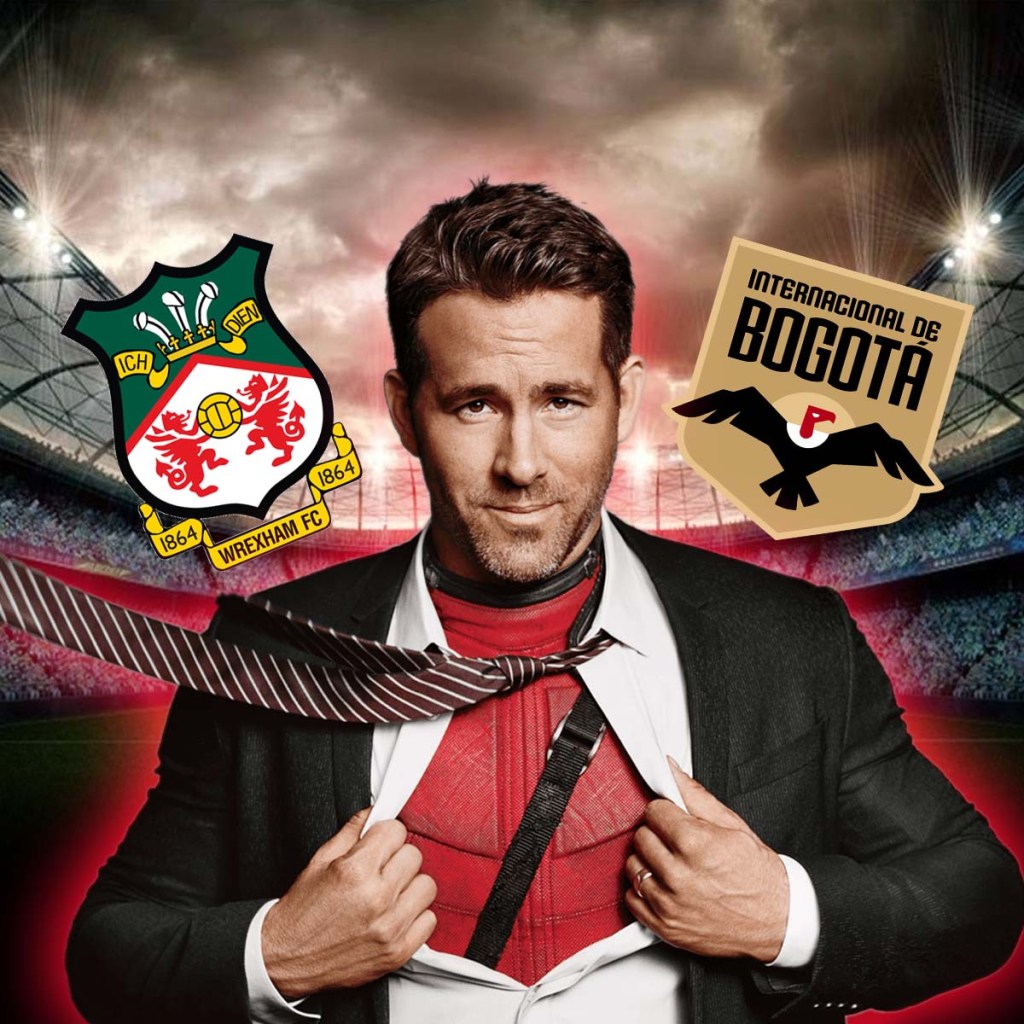
For decades, football club owners were silent businessmen, investment funds, or distant magnates. Today, that profile is changing. One of the most striking cases is Ryan Reynolds, a Hollywood actor who has moved from the big screen to the stands—not as a mere investor, but as a storyteller who uses football as his stage.
His name no longer appears only in movie credits, but also in conversations about historic clubs, identity shifts, communities, and new ways of understanding the business of sport.
An Actor Who Doesn’t Buy Trophies, He Buys Stories
Ryan Reynolds does not invest in the world’s biggest football giants. His strategy is different: he buys clubs with history, identity, and problems—teams that were once important but fell behind, were poorly managed, or became disconnected from their people.
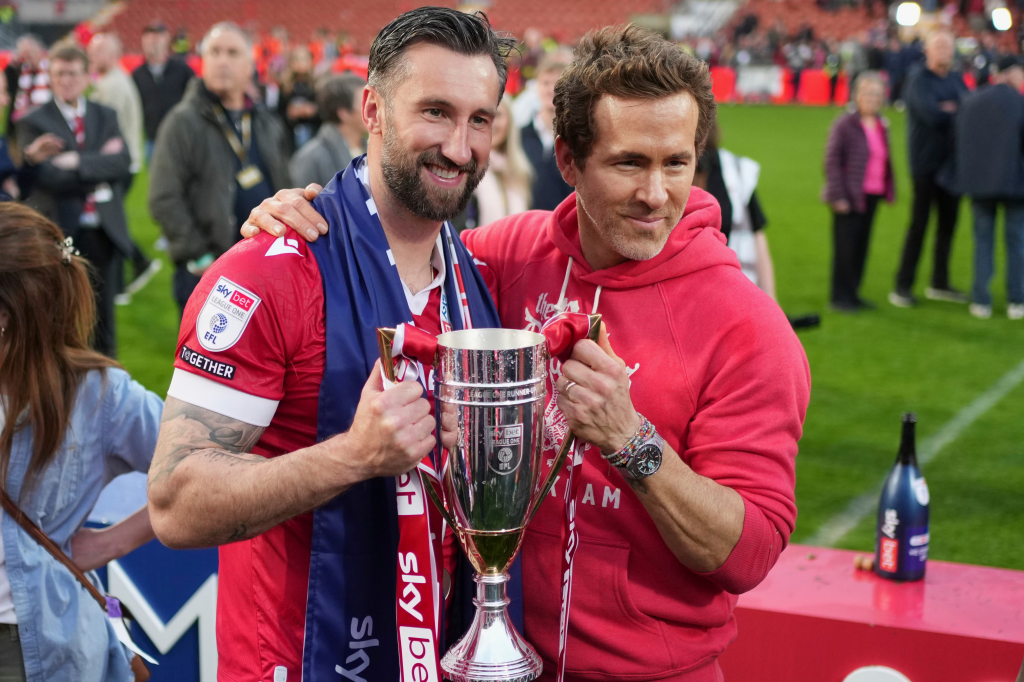
The most emblematic case is Wrexham AFC, a historic Welsh club drifting through the lower divisions. Reynolds didn’t arrive promising immediate titles, but something else: visibility, narrative, and closeness. Every match became a chapter, every player a character, and every fan part of the story.
In his hands, football stopped being just about results and became emotional content.
The Reynolds Model: Football, Brand, and Community
What Reynolds applies is not a traditional model. It is a sports investment based on storytelling, where the club functions as a cultural brand:
- Real stories are told, not perfect scripts
- Behind-the-scenes moments, mistakes, and defeats are shown
- The local community is the protagonist, not a prop
- The owner appears, speaks, makes mistakes, and learns
This approach has turned small clubs into global phenomena, followed by people who previously didn’t even watch football.
When the Model Changes: Necaxa and Inter de Bogotá
Not all projects follow the same path. In Latin America, the logic is often more corporate and complex.
In the case of Necaxa, the investment was partial. Buying only a stake reduces risk, allows testing the market, and provides access to a strong league like Mexico’s—but it also limits control. Without full control, it is harder to sustain a clear and emotional narrative.
The case of La Equidad, rebranded as Inter de Bogotá, shows another side of the business. Here, the decision was to change the name and relaunch the brand. La Equidad had a weak, corporate identity; “Inter” sounds global, exportable, and more attractive to sponsors. However, this type of transformation often generates wear, rejection, and a sense of loss among the few fans who did identify with the original club.
It is a model closer to a franchise: it works on paper, but not always in the heart.
Why Does Football Attract an Actor So Much?
Reynolds does not approach football like a traditional fan. What attracts him is something else:
- Football is real drama, without a script
- It brings together children, young people, and older adults
- It generates authentic, not acted, emotions
- It offers stories that never repeat themselves
For someone who lives off storytelling, football is live cinema—an endless series where ordinary people are the protagonists.
Two Paths, One Business
Today, two clear models coexist:
- The narrative and community-driven model, where identity is respected and the story is amplified (Ryan Reynolds).
- The corporate and expansion-focused model, where brand, control, and scalability are prioritized (cases like Necaxa or Inter de Bogotá).
Both seek profitability, but only one turns the club into something more than a financial asset: it turns it into a shared story.
The New Owner of Football
Ryan Reynolds represents a new figure in sport:
not the distant magnate, but the visible owner, the storyteller, the symbolic partner of the community.
In an increasingly globalized football world, his approach leaves an open question:
Is the future of clubs about changing names and crests, or about learning to tell who they really are?
For now, Reynolds has already proven one thing:
in times of saturation and fleeting results, identity also plays the match.


 Don Chris Gambler
Leave a comment